
Solder and soldering agents

- ESD protection
- Solder and solder agents
- Factory equipment
- Personal protective equipment (PPE)
- PCB processing and handling
- Component processing
- Component storage
- SALE
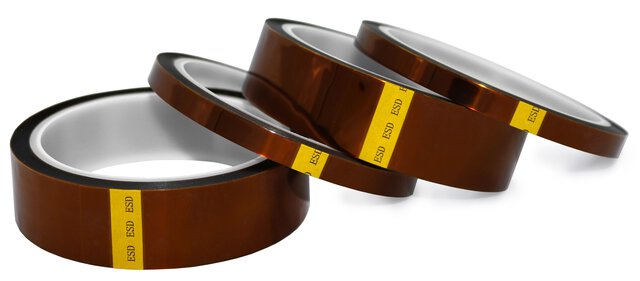

ESD Kapton/polyimide tape, amber, 33 m, various versions
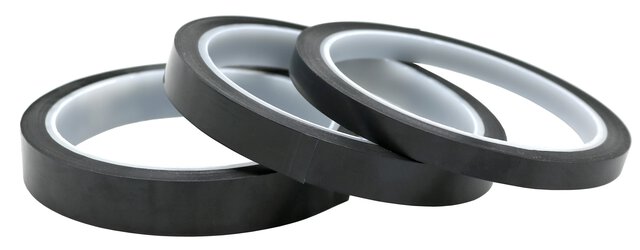
ESD Kapton/Polyimide tape, black, 33 m, various versions
What are the differences between lead-free and leaded solder?
Lead-free solders are usually based on tin-silver-copper alloys and are favoured in electronics production due to the RoHS directive. They require higher processing temperatures than lead-containing Sn60Pb40 or Sn63Pb37 solders. Lead-containing alloys have better wetting properties and are often used in service, in aviation or for old assemblies.
Which flux is suitable for SMT soldering processes?
No-clean fluxes are mainly used for SMT processes as they leave little residue and often do not require cleaning. Water-soluble or more strongly activated fluxes are used for demanding assemblies or high oxidation. The decisive factors are wetting behaviour, residue formation and process compatibility with reflow or selective soldering systems.
When is solder wire with integrated flux used?
Solder wire with a flux core is mainly used for manual soldering work, repairs and rework. The integrated flux removes oxide layers directly during the soldering process and improves the wetting of the contact surfaces. This creates an even surface for a strong and reliable solder joint. Different flux classes such as REL0 or ROM1 influence activity, residues and cleaning effort in accordance with IPC J-STD-004.
What role does alloy selection play in electronic assemblies?
The alloy influences the melting temperature, wetting behaviour and resilience of the solder joint. Tin-lead alloys such as Sn60Pb40 are often used for repair and service work. In RoHS-compliant series production, lead-free tin-silver-copper alloys such as Sn96.5Ag3Cu0.5 are usually used. Silver improves the mechanical stability, while copper supports the reliability of the soldered connection.