
Electrostatic fieldmeter

- ESD protection
- Solder and solder agents
- Factory equipment
- Personal protective equipment (PPE)
- PCB processing and handling
- Component processing
- Component storage
- SALE
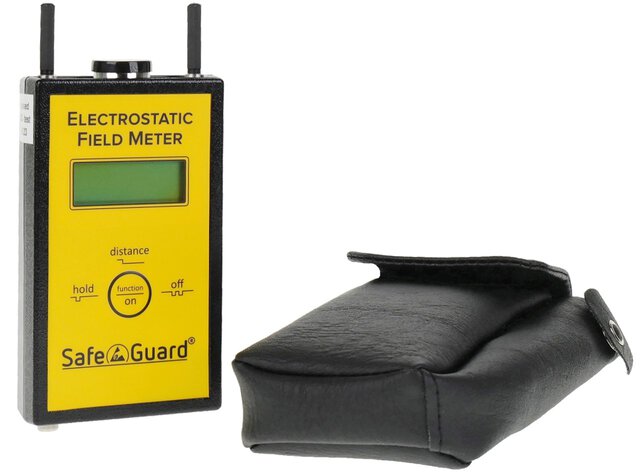

Safeguard Electric field meter, digital, incl. case
Available
Item No.
WL73724
Manufacturer
SAFEGUARD
Manufacturer No.
SFM PRO
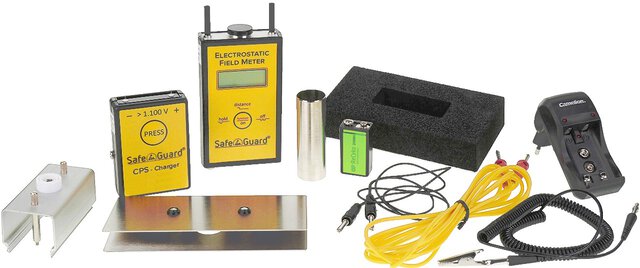
Safeguard Electric Field Meter Verification Kit incl. aluminum case
Available
Item No.
WL73731
Manufacturer
SAFEGUARD
Manufacturer No.
SFM PRO AKC
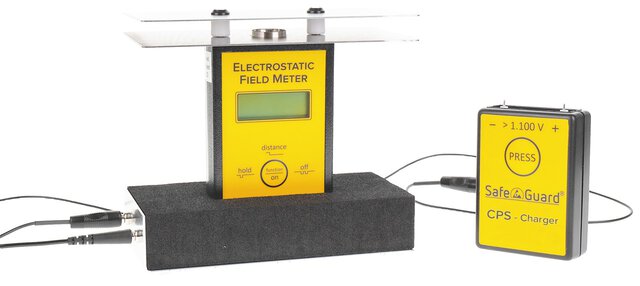
Safeguard Electric field meter, digital, incl. Charge Plate Set (CPS)
Available
Item No.
WL73725
Manufacturer
SAFEGUARD
Manufacturer No.
SFM PRO CPS
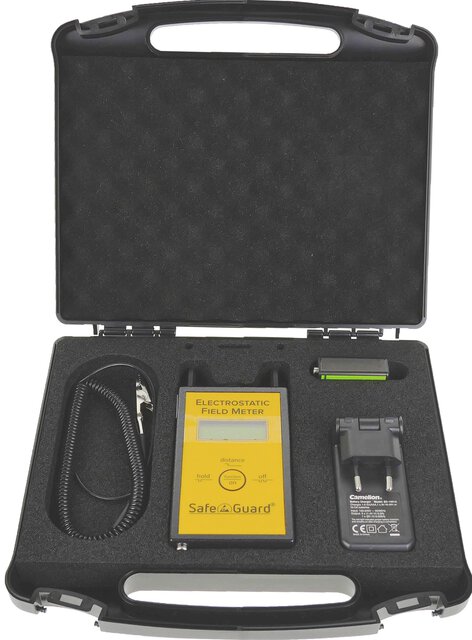
Safeguard electric field meter in an ESD case
Available
Item No.
WL73730
Manufacturer
SAFEGUARD
Manufacturer No.
SFM PRO ZBS
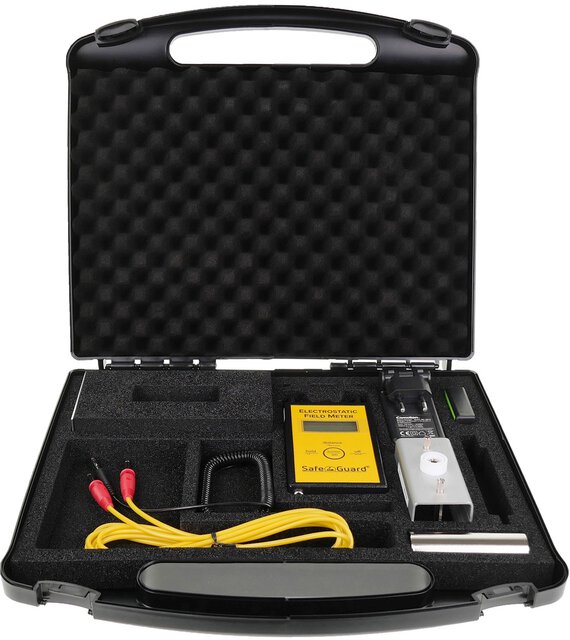
Safeguard Walking Test Kit WT incl. ESD readiness case
Available soon
Item No.
WL73728
Manufacturer
SAFEGUARD
Manufacturer No.
SFM PRO WT
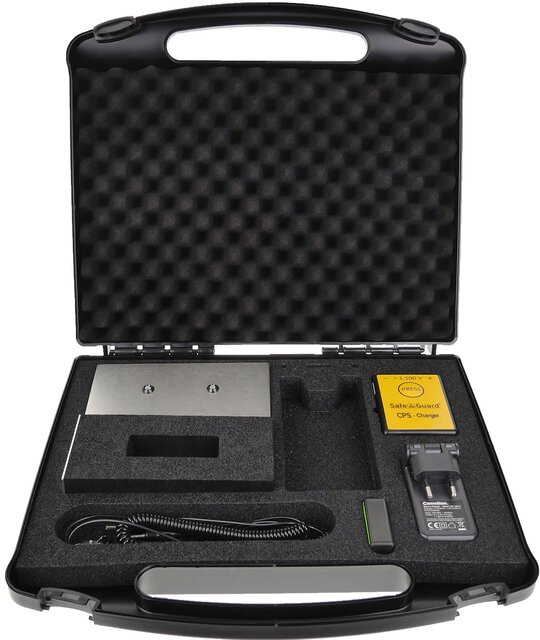
Safeguard Charge Plate Monitor Upgrade Set CPS for SafeGuard electric field meter
Available soon
Item No.
WL73726
Manufacturer
SAFEGUARD
Manufacturer No.
CPS PRO
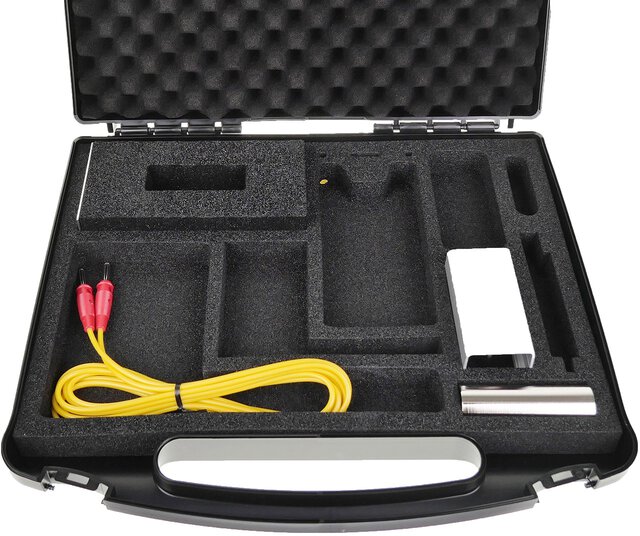
Safeguard Walking Test Kit Upgrade Set VMS for SafeGuard electric field meter
Available soon
Item No.
WL73729
Manufacturer
SAFEGUARD
Manufacturer No.
WTS PRO
Why are electric field meters used?
Electric field meters measure electrostatic fields and surface voltages on materials, workstations or persons within EPA areas. They help to recognise critical charges at an early stage and reduce ESD risks in production and test areas.
Which areas are tested with electric field meters?
Typical applications include work surfaces, packaging materials, floor coverings, device housings or insulating materials within electrostatically protected areas.
Why are electrostatic fields problematic in electronics manufacturing?
Even low electrostatic voltages can damage sensitive electronic components or cause latent faults. Electrostatic field measurements support the control of such risks within production.
When are non-contact measurements used?
Non-contact measurement methods are particularly suitable for sensitive surfaces or moving materials where direct contact measurements would be unsuitable.