
ESD cleaning

- ESD protection
- Solder and solder agents
- Factory equipment
- Personal protective equipment (PPE)
- PCB processing and handling
- Component processing
- Component storage
- SALE
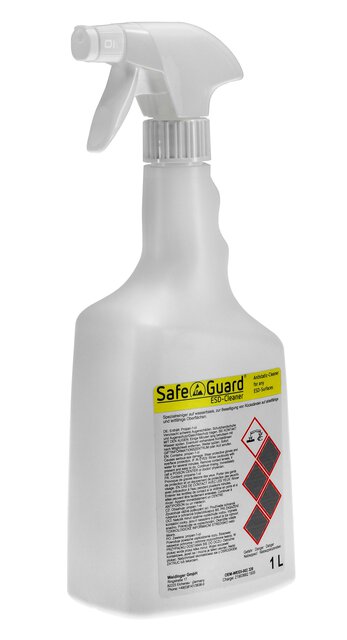

ESD cleaner Charge Clean, spray bottle, 1 liter
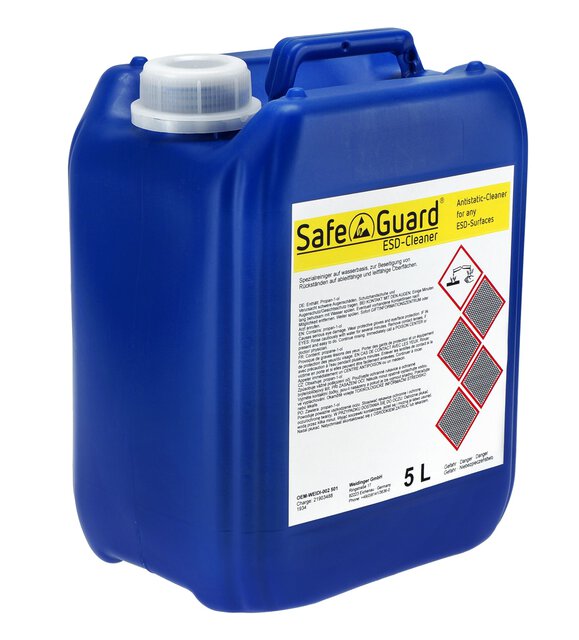
ESD cleaner Charge Clean, canister for refilling, 5 liters
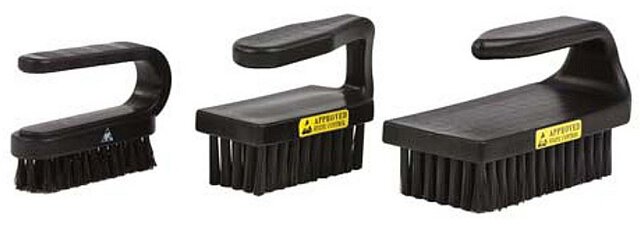
ESD brush with handle, black, 85 mm
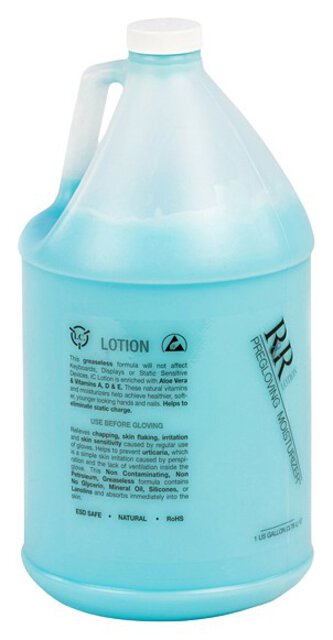
Refill bottle for hand lotion, 3,75 l
Why are special ESD cleaning agents used?
Conventional cleaning agents can leave insulating residues and impair the conductivity of ESD surfaces. ESD cleaners remove soiling without changing the electrostatic properties of floor coverings, table mats or work surfaces. This maintains defined resistance values in EPA areas.
Which areas need to be cleaned regularly in an EPA zone?
Particularly important are work surfaces, floor coverings, transport trolleys and contact surfaces with frequent personal or material contact. Dust and residues can affect the controlled dissipation of electrostatic charges. Regular cleaning therefore supports both ESD protection and process safety in electronics production.
Why are aggressive cleaning agents problematic in EPA areas?
Solvents or highly residue-forming cleaning agents can damage ESD coatings or create insulating surfaces. This changes the electrical resistance values and the protective effect of the EPA zone can be lost. This is why specially formulated ESD cleaning agents are used.
What role does cleaning play with ESD floor coverings?
Soiled floor coverings can impair the dissipation of electrostatic charges and change the resistance value. Regular cleaning maintains the electrical function of the floor and at the same time improves the effectiveness of personal earthing via ESD shoes and earthing systems.