
ESD gloves

- ESD protection
- Solder and solder agents
- Factory equipment
- Personal protective equipment (PPE)
- PCB processing and handling
- Component processing
- Component storage
- SALE
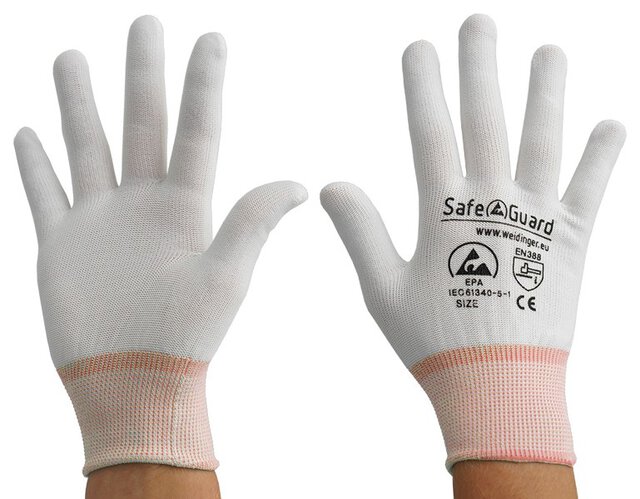

ESD glove white, without coating
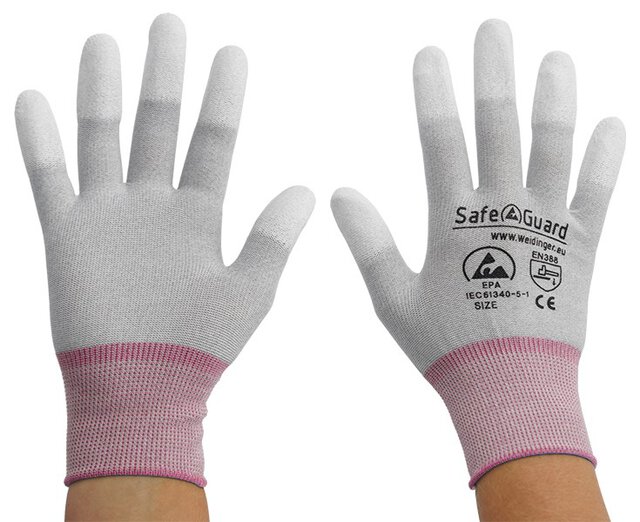
ESD glove grey, coated fingertips, nylon/carbon
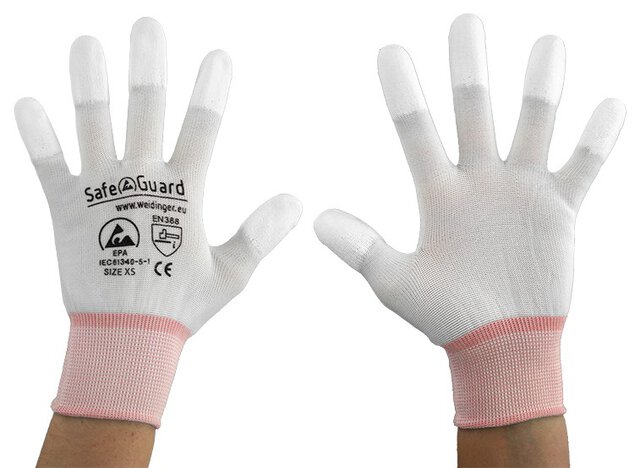
ESD glove white, coated fingertips
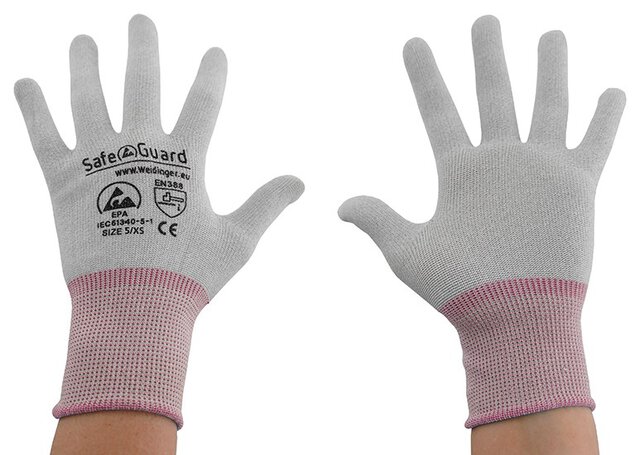
ESD glove grey, without coating, Nylon/Carbon
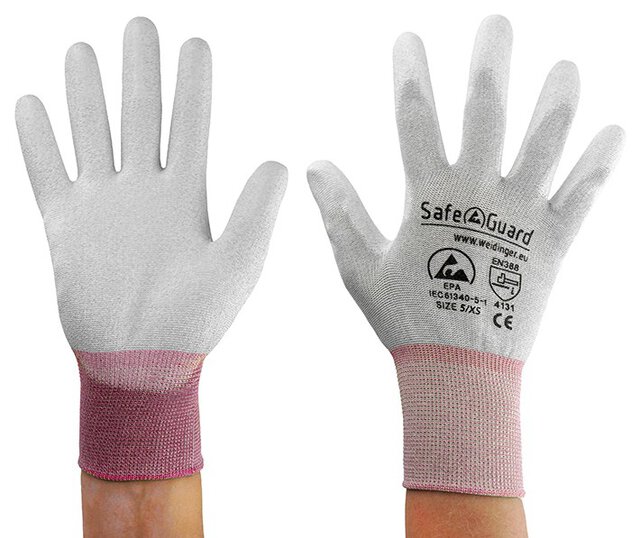
ESD glove grey, coated palms, nylon/carbon
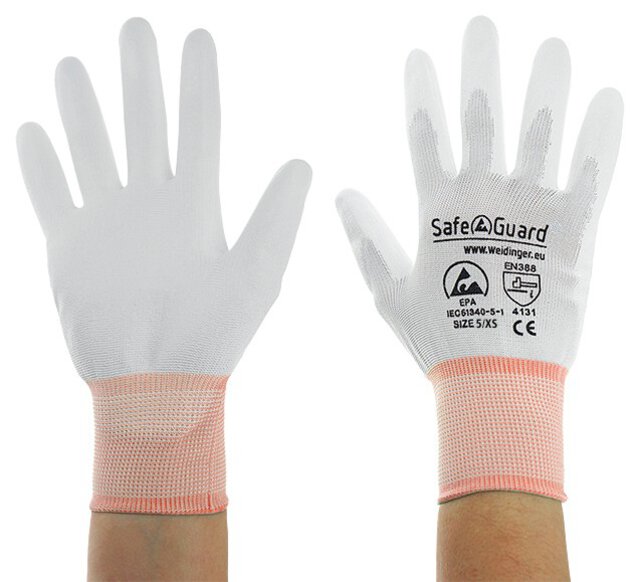
ESD glove, white, coated palms, nylon

ESD glove, gray, coated palms, nylon/carbon, 3XL
Why are ESD gloves used?
ESD gloves reduce electrostatic charging during direct contact with electronic assemblies and components. At the same time, they protect sensitive surfaces from fingerprints, dirt and mechanical influences.
When are fingertip-coated gloves used?
Fingertip-coated models improve the feel and precision of small electronic components. They are often used in SMT assembly, rework and precision assembly.
What are the requirements for ESD gloves?
ESD gloves must have controlled discharge values and at the same time allow sufficient dexterity for precise work. The material, coating and fit depend on the application and working environment.
What materials are used for ESD gloves?
ESD gloves are often made of nylon-carbon blended fabrics with woven-in conductive carbon fibres. Nylon ensures high flexibility, a good fit and low particle formation, while carbon supports the controlled dissipation of electrostatic charges. Depending on the application, the gloves are also combined with PU or nitrile coatings to improve grip, abrasion resistance or chemical resistance.