
Flooring and accessories

- ESD protection
- Solder and solder agents
- Factory equipment
- Personal protective equipment (PPE)
- PCB processing and handling
- Component processing
- Component storage
- SALE
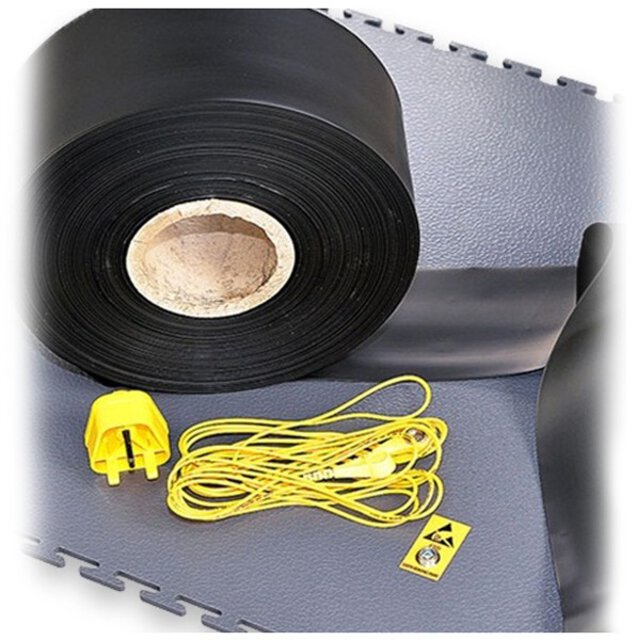

ESD grounding strap, black, 100 x 0.08 mm, various versions

ESD floor covering, light gray, 1900 x 2.5 mm, 10 m
Copper tape, self-adhesive, roll, 30 m
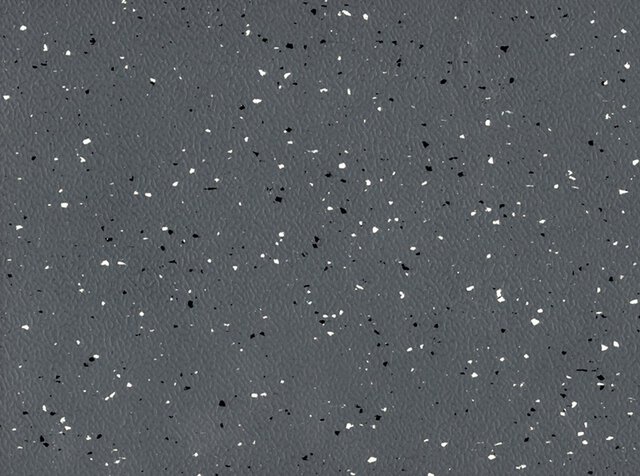
ESD floor covering, gray, 1220 x 3.5 mm, 10 m
What requirements apply to ESD floor coverings?
ESD floor coverings must dissipate electrostatic charges in a controlled manner and have permanently stable resistance values. In EPA areas, dissipative flooring solutions are usually used that dissipate personal charges via ESD shoes and earthing systems.
Why are floor coverings important in EPA areas?
The floor is part of the overall ESD protection concept and supports the controlled earthing of personnel within the EPA zone in industry and electronics production. Without suitable flooring, people can become electrostatically charged through movement and jeopardise sensitive assemblies.
What are the differences between conductive and dissipative floor coverings?
Conductive floor coverings have low resistance values and dissipate charges very quickly. Dissipative materials reduce voltages in a more controlled manner and minimise the risk of sudden discharges. Dissipative systems are often used for electronic workstations.